
If your ribs ache when you lie down, don’t panic – you can still get a good night’s sleep with the right support. The key is side-sleeping with lots of pillows. Lie on your left side (this improves blood flow for you and baby) and tuck a pillow between your knees and another under your belly. This aligns your spine and takes the weight of your growing uterus off your ribs. You might also place a pillow behind your back so you don’t roll onto your back overnight. These simple adjustments – side sleeping with knee/belly support – can dramatically reduce rib pressure and help you sleep more comfortably.
Pregnant women often find relief by sleeping on their side with extra pillow support. In this position the belly and hips stay aligned, which eases strain on the ribcage. Use a long body pillow or pregnancy wedge to prop your abdomen and back. It’s especially helpful to bend your knees slightly and put a cushion between them – this keeps your hips level and spine straight. With your bump supported, the pressure on your ribs is much less, making it easier to doze off despite the discomfort.
Why Rib Pain Happens in Pregnancy
Rib pain is very common in the third trimester (and can even start in the second trimester) as your baby grows upward into your ribcage. The expanding uterus literally pushes on the ribs and the diaphragm, which can feel like sharp or aching pain under the chest. Pregnancy hormones (especially relaxin) also loosen your ligaments, including those holding the ribs, so your ribcage can expand – but this can also make the area feel inflamed or tight. In addition, issues like heartburn or indigestion are more common in pregnancy (since the baby presses on your stomach), and reflux can also cause chest/rib discomfort. All of this usually means mild-to-moderate rib ache that’s normal, but it’s still helpful to ease it for better sleep.
Best Sleep Positions for Rib Pain
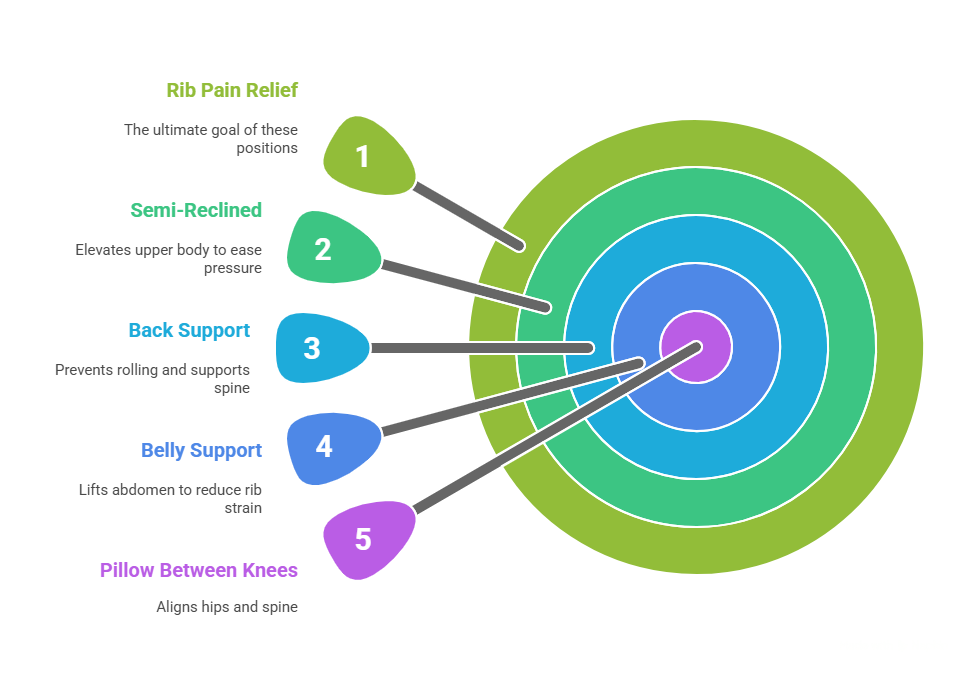
- Sleep on your left side: Lying on your left side is generally safest and most comfortable in pregnancy. It keeps the uterus off your vena cava and can relieve liver pressure. Put pillows under your head to keep your neck aligned, and bend your knees. This position naturally eases the weight on your ribs.
- Pillow between knees: A pillow or body pillow between the knees keeps your hips level and straightens the spine. This hip alignment takes stress off your back and lower rib area.
- Support your belly: Tuck a small pillow or wedge under your bump to prop up your abdomen. This prevents your belly from hanging unsupported, which otherwise can tug on your ribs.
- Back support: Place a pillow behind your lower back or use a wedge behind you to keep you from rolling onto your back. Back support also gives your lumbar spine a break.
- Semi-reclined if needed: If lying flat is too painful, sleep propped up at a slight angle. Use extra pillows to elevate your head and upper body (or try a recliner). This semi-reclined angle can relieve pressure on your diaphragm and ribs.
Pillows and Body Support
Getting the right pillow setup can make a huge difference. Try these tactics:
- Between the knees: As mentioned, put a soft pillow between bent knees. This aligns your pelvis and spine, which reduces the pull on your ribs.
- Under the belly: A firm pregnancy wedge or pillow under your lower belly lifts and supports the uterus. Think of it as a gentle cradle that keeps your bump from dragging down on your ribs.
- Behind your back: A pillow behind you (or along your side) prevents you from rolling onto your back. It also helps support your spine and upper back muscles.
- Full-body pillow: Body pillows (C-shaped or U-shaped) hug your whole body for all-around support. They let you nestle into a comfortable position with padding everywhere. These pillows can be especially helpful if you have rib pain, since you can adjust them under your neck, arm, belly, and legs for even pressure distribution.
Experiment with different pillows until you find a setup that “locks you in” on your side. Keeping your spine straight and belly supported is the goal – it helps prevent the rib cage from being squashed by the weight of your bump.
Other Comfort Measures
- Maintain good posture: During the day, stand and sit tall with shoulders back. Slouching forward or hunching compresses the ribs. Keeping your back straight reduces rib strain both day and night.
- Supportive clothing: Wear loose, breathable clothes that don’t press on your ribcage. A well-fitted maternity bra (without tight underwires) can help hold up your breasts and reduce rib/thorax strain. Avoid high collars or tight shirts that squeeze under the arms.
- Gentle stretches: Before bed (or whenever you’re at rest), try some gentle side bends and breathing exercises. For example, sit or stand and slowly lean to one side, stretching the arm overhead. Hold and take deep breaths – this can “open up” the ribcage and relieve tightness. Cat-cow yoga poses and prenatal yoga routines are also great for keeping your back and ribs flexible.
- Deep breathing: Practice slow, deep belly breaths. Breathing fully expands the ribs and can alleviate tension. HSE experts recommend deep breathing exercises daily and before bedtime to relax rib muscles.
- Heat or cold: Apply a warm heating pad or a hot water bottle (wrapped in a towel) to the rib area (never directly on the skin). Heat can relax tight muscles. Alternatively, a cold pack can reduce inflammation if the ribs feel swollen. Just avoid placing any pack on your abdomen – only use it on the rib cage.
- Pain relief options: If the ache is bad, talk to your doctor about safe remedies. Some OBs may recommend acetaminophen. Topical gels (like Icy Hot or Biofreeze) can be dabbed on the ribs for temporary relief, and kinesiology tape or a pregnancy support belt can give extra rib cage support.
- Sleep environment: Make sure your bedroom is cool, dark, and quiet. Sometimes changing sleep hygiene (like avoiding screens before bed and going to bed at the same time) can help you fall asleep faster even if you’re uncomfortable. A calm routine might lessen overall body tension.
When to Seek Medical Advice
Mild rib pain is usually normal, but certain warning signs mean you should call your healthcare provider:
- Right-side pain: Pain under the right ribs (especially in the third trimester) could signal liver or gallbladder issues, which need evaluation.
- Preeclampsia symptoms: If rib pain comes with a bad headache, vision changes (blurriness, flashing lights), sudden swelling, or very high blood pressure, these could be signs of preeclampsia. In particular, a severe pain under the ribs with headaches can indicate preeclampsia.
- Persistent or severe pain: If the pain is intense, constant, or getting worse (or if you have chest pain, coughing up blood, or trouble breathing), seek help right away. Your doctor might check your blood pressure, liver and gallbladder, or do other tests to be safe.
- Early pregnancy concerns: Note – if you feel rib or shoulder pain before 12 weeks, you should tell your doctor, as it is rare but can signal an ectopic pregnancy.
Generally, trust your instincts: if something feels “off” or the tips above don’t help, it’s worth a quick check with your OB or midwife. They can reassure you that everything is okay or suggest additional care (like a prenatal physical therapy referral).
Conclusion:
Rib pain in pregnancy is common and usually manageable. By sleeping on your side with pillows supporting your belly and legs, keeping good posture, and using simple home remedies (like stretches and heat), you can often reduce the ache and rest better. However, if any concerning symptoms develop or the pain is severe, be sure to contact your healthcare provider for personalized advice