
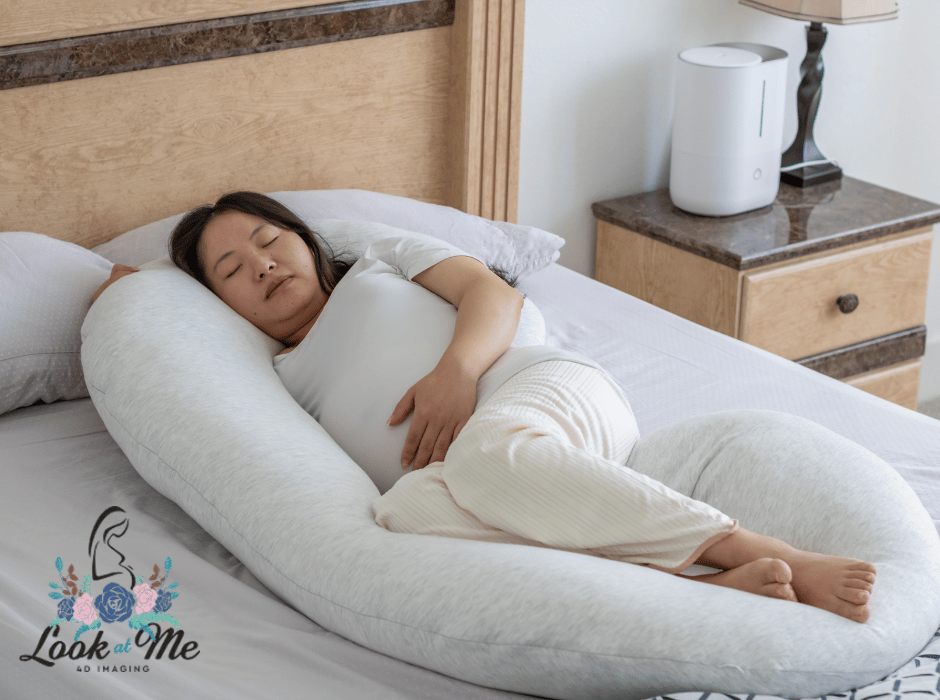
Pregnancy pillows are specially shaped cushions that help pregnant moms sleep more comfortably. In short, to use a pregnancy pillow, sleep on your side (usually the left side) and tuck the pillow in to support your belly, back, hips, and legs. For example, you might lay in the curve of a U-shaped pillow with one side supporting your bump and the other under your knees, so that your spine stays straight and your hips are aligned. Health experts agree this makes side-sleeping easier: the American College of Obstetricians (ACOG) recommends sleeping on your side with one or both knees bent and “placing a pillow between your knees and another under your belly”. Doing this relieves pressure on your back and helps blood flow to your baby.
Pregnancy pillows also encourage left-side sleeping, which many specialists say is best for circulation and baby’s nutrient flow. In practice, using the pillow means experimenting with its position until you feel well-supported. For example, try tucking part of the pillow between your legs (to support your hips) and draping another part under your belly or behind your back. As one guide puts it, a maternity pillow can be used “as early as you like” in pregnancy – anytime you need extra support for your changing body.
Why Use a Pregnancy Pillow?
As your body grows, sleeping comfortably can be a challenge. Pregnancy pillows provide targeted support so you don’t wake up aching in the morning. They help relieve hip, back, and leg pain by keeping your spine neutral and hips aligned. For instance, resting one knee on the pillow takes strain off your lower back, and snuggling the pillow around your belly takes weight off your abdomen.
Using a pregnancy pillow also makes side-sleeping easier. Sleeping on your side (especially the left side) improves blood flow to the uterus and baby. Most experts (ACOG, Mayo Clinic, Sleep Foundation) agree that after the first trimester you should avoid flat-back or stomach sleeping. A pregnancy pillow simply lets you stay on your side more comfortably. Doctors and nurses suggest keeping your knees bent with the pillow between them – this keeps your pelvis level and spine straight. In other words, side-sleep with pillows under and between you (for example, a pillow under your belly and between your legs) to help your back and hips relax.
Types of Pregnancy Pillows

Pregnancy pillows come in different shapes to fit your needs. The most common shapes are U-shaped, C-shaped (also called J-shaped), I-shaped (body pillows), and wedge pillows. Each can be used differently:
- U-shaped Pillow: This pillow looks like a big “U.” You can lie in the curve so that one arm of the U is under your head and the other is tucked between your legs. The photo above shows a typical U-pillow. This gives full-body support (head to toes), aligning your spine and relieving pressure on hips and back. Many women wrap a U-pillow around their body, resting their head on one side and wedging the other side under their belly and between their knees. The result is even support for both front and back.
- C-shaped (or J-shaped) Pillow: A C-shaped pillow is like half of a U. You can use it in front or behind your body. For example, place the curve of the “C” at your waist and rest your head on one end; then slip the other end between your knees. In the image above, the C-pillow is placed behind the mother’s back. This holds up her torso so her spine stays aligned. Alternatively, you could put the long part in front of you to cradle your bump (supporting your belly and knees). A C-shaped pillow is great if you want one side of your body fully supported at a time.
- I-shaped (Body) Pillow and Wedge: An I-shaped pillow is a straight long pillow (like a full-body pillow). To use it, simply lie on your side and hug or wedge the pillow along your front. You might tuck it under your neck and bump or between your knees. The image above shows a body pillow being used along one side for support. Even a regular long pillow can work in this way. A smaller wedge pillow is another option: it’s a firm triangle you slip under one area (under your belly or behind your back) for support. For example, slide a wedge under your bump to take weight off your belly, or under your hips to relieve hip pain.
In each case, the idea is to support whatever part of your body needs it. U-shaped pillows support head, belly, and legs at once; C-shaped pillows let you focus on either your front or back; I-shaped pillows and wedges are simpler ways to brace a single area. You can try different shapes or even switch pillows as needed – the key is what feels best for you.
How to Position Your Pregnancy Pillow
- Side sleeping (best): Lie on your left side (doctors recommend this side for better circulation). Bend both knees slightly. Place the pillow so it braces you from top to bottom. For example: tuck the pillow between your knees (or thighs) to keep hips level, and rest the top of the pillow under your belly and head. This way your bump, hips, and back are all cushioned. You may also put a small pillow behind your back if you like extra support. Sleep with your pillow fluffed and adjusted – every body is different, so shift it until you feel well-aligned. As one expert guide notes, using pillows between your knees, under your stomach, or even a full-body pillow can make side-sleeping easier.
- Sleeping on your back (gentle use): After about 20 weeks of pregnancy, sleeping flat on your back is discouraged. If you do end up on your back, it’s okay briefly – just try to move back to your side. One trick is to tuck a small pillow or wedge under one hip; this tilts your body slightly to the side. (The nurse-author of one guide explains that raising one hip prevents the vena cava compression that flat-back sleeping can cause.) You can also put a pillow under your knees to reduce strain on your lower back. But overall, aim to go back to your side; even ACOG says to “turn to one side or the other” if you find yourself on your back.
- Propped-up or semi-reclining: If you need to sit up (for heartburn relief or reading in bed), use the pregnancy pillow as a backrest. For example, wrap a U-shaped or long body pillow around your waist and back while sitting. You can also place the pillow under your head and shoulders to raise your upper body slightly – this helps heartburn and breathing. The Sleep Foundation suggests elevating your upper body with pillows or a wedge if heartburn bothers you. Likewise, the example below shows a mother using the pillow under her bump and around her back while sitting, which takes pressure off her belly. Adjust pillows or blankets under you until you feel snug: whether reading, watching TV, or napping, the goal is to remove strain from your back and belly.
- General adjustments: Feel free to fluff, fold, or reposition the pregnancy pillow any way that helps. You might add a regular pillow on top of it for extra height, or roll part of it tighter. If one shape isn’t working, switch to another – some women even use two pillows (for example, a small wedge under the belly plus a long body pillow). The trick is trial and error: keep shifting until your spine feels straight, your hips feel supported, and you don’t have to strain to breathe. Over time, you’ll learn what arrangement lets you relax most deeply.
Comfort and Care Tips
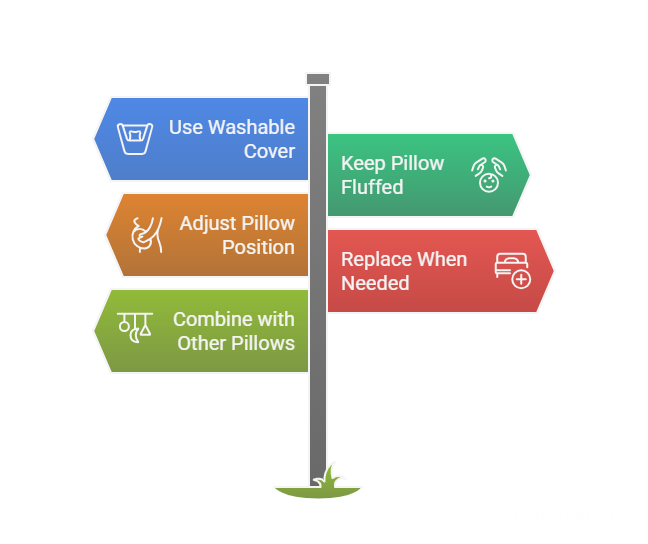
- Use a washable cover. To keep things clean, use a removable pillowcase or cover. Wash it often on a gentle cycle so the pillow stays fresh. If the inner pillow is washable (check the care label), use a delicate setting or spot-clean as needed. Good hygiene helps with pregnancy allergies or nasal congestion.
- Keep it fluffed. Before bed, give your pillow a fluff and shake. Fluffing helps maintain its thickness and support. If it ever feels flat or uneven, redistribute the stuffing or add a folded blanket for extra cushion.
- Adjust as pregnancy changes. Your ideal position may change from month to month. In early pregnancy you might use less support, but as your bump grows you may need more pillow under your belly or between your legs. Don’t hesitate to reposition the pillow each night as needed.
- Replace when needed. Pregnancy pillows are used a lot, so over years the filling can flatten. If yours is old (a few years or more) or it loses shape, consider getting a new one. A saggy pillow won’t give the support you need.
- Combine with other pillows. You can also supplement the pregnancy pillow with regular pillows. For example, a small cushion under your ankles or a soft neck roll can add comfort. Use what feels good without stiff rules.
Following these tips (and listening to your body) will help you get the most from your maternity pillow so you can sleep more soundly and wake up feeling rested.
Frequently Asked Questions
Which side should I sleep on with a pregnancy pillow?
Doctors generally recommend sleeping on your left side during pregnancy to improve blood flow to the placenta and baby. Using your pregnancy pillow on the left side helps keep your body in that safe position. You can also sleep on your right side if that’s more comfortable, but aim to spend most of the night on the left. In any case, keep your knees bent and the pillow between them so your spine stays aligned.
When should I start using a pregnancy pillow?
You can start using one whenever you need extra comfort. Many women begin in the second trimester (around 20 weeks) when their belly grows and side-sleeping gets harder. However, there’s no wrong time to try it — if you wake up uncomfortable at night, go ahead and use the pillow. In fact, experts say you can use a pregnancy pillow “as early as you like”. Some women even use them postpartum to help with recovery and nursing support.
How do I clean my pregnancy pillow?
Check the care instructions on your pillow first. Most have a removable cover – wash the cover regularly in your machine’s gentle cycle with mild detergent. If you need to clean the pillow itself and it’s machine washable, use cool water on a delicate setting. Otherwise, spot-clean stains or use a damp cloth with mild soap. Let it air-dry completely to avoid dampness. If your pillow doesn’t have a removable cover, you can wrap it in a towel and wash gently, but many people prefer to have a spare cover on hand for easy washing.
Is it okay if I sometimes wake up on my back?
It’s best to avoid sleeping flat on your back after the first trimester, as your uterus can press on blood vessels. If you find yourself on your back, try to shift back to your side. One simple trick is to tuck a small pillow or wedge under one hip; this tilts you back toward a side position and relieves pressure. Another method is to sleep on a slight incline (propped up by pillows) which also takes strain off your back. But overall, aim to return to a side-sleeping position.
What if I don’t have a specialized pregnancy pillow?
You can use regular pillows in a similar way. A long body pillow or even two stacked pillows between your knees can mimic the effect. Place pillows under your belly and between your legs to align your hips. Even a firm wedge or cushion under one side of your body can help tilt you onto your side. While pregnancy pillows are designed for comfort, ordinary pillows can work in a pinch. Just support the same key points (belly, back, legs) as described above.