

When you feel cramps around mid-cycle, you might wonder if it’s an early sign of pregnancy. The answer is no, cramping during ovulation is usually not a sign of pregnancy. Those pains are almost always ovulation cramps (known as mittelschmerz), which occur when your ovary releases an egg. Pregnancy-related cramps (from implantation) happen many days after ovulation – not at the moment of ovulation. In other words, mid-cycle cramps typically mean you’re ovulating, not conceiving.
Mittelschmerz (“middle pain”) is a common, usually mild ache some women feel about two weeks before their next period. It can be dull or sharp and often lasts a few minutes to a few hours. Only a minority of women have noticeable ovulation cramps, and they don’t necessarily indicate anything unusual. So if you have a twinge or cramp in the middle of your cycle, it’s almost certainly just ovulation. Implantation cramps – the ones linked to pregnancy – occur later (about 6–12 days after ovulation) and are much less common.
What Causes Ovulation Cramps?
Ovulation cramps happen when a mature egg bursts out of an ovarian follicle. The bursting follicle and a bit of fluid or blood can irritate the lining of the abdomen, causing pain on one side of the lower belly. Doctors aren’t fully sure why some women feel this pain and others don’t, but possible reasons include the follicle stretching the ovary, fluid from the rupture, or muscle spasms in the fallopian tube.
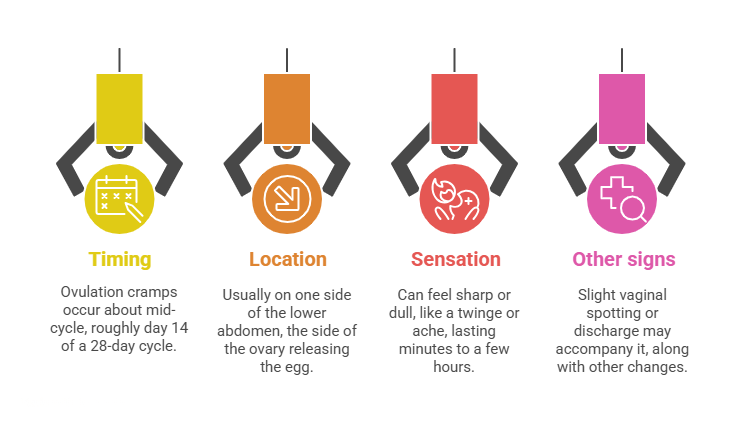
- Timing: Ovulation cramps occur about mid-cycle (roughly day 14 of a 28-day cycle).
- Location: Usually on one side of the lower abdomen (the side of the ovary releasing the egg).
- Sensation: Can feel sharp or dull. Some women describe it as a twinge or ache. It often lasts minutes to a few hours (occasionally up to a day).
- Other signs: Sometimes slight vaginal spotting or discharge may accompany it. You might also notice changes like a spike in basal body temperature, breast tenderness, or extra-clear cervical mucus around ovulation.
In short, ovulation cramps are a normal part of your cycle. They signal that your body is releasing an egg. They aren’t an indication of pregnancy or a health problem unless they become very painful or unusual. In fact, up to 40% of people who ovulate report feeling something during ovulation.
What Is Implantation Cramping (Pregnancy Sign)?
Pregnancy-related cramping can happen if a released egg is fertilized and implants into the uterus. This is called implantation, and it usually occurs about 6–10 days after ovulation (on average around 10–14 days post-ovulation). This is often 1–4 days before your expected period date. When implantation happens, a small amount of light bleeding or spotting can occur, sometimes with very mild cramping.
However, implantation cramps are usually very faint. One expert notes that any cramping should be light or mild and much less intense than menstrual cramps. You might barely notice them, if at all. Only about 1 in 4 pregnant women experience noticeable implantation bleeding or cramping. For most, the first clear signs of pregnancy are a missed period or positive pregnancy test days later.
The key point: implantation cramps happen later than ovulation cramps. So pain right at ovulation time (mid-cycle) isn’t implantation. Implantation cramps (if they occur) happen roughly a week or more after you ovulate. That’s why ovulation cramps and implantation cramps should not be confused – they occur at different times.
How to Tell Ovulation Cramps vs. Pregnancy Cramps
Since both ovulation and early pregnancy can cause slight cramps, it helps to look at the timing and context:
- Timing in your cycle: Ovulation pain happens about halfway through your cycle (around day 14 of a 28-day cycle). Implantation cramps occur later – typically about 6–12 days after ovulation (often around day 20–22). If the cramp comes mid-cycle, it’s almost certainly ovulation. If it comes close to when your period would start, it could be implantation (or just pre-period symptoms).
- Pain intensity: Ovulation cramps can range from mild twinges to a sharp poking pain, and they usually last minutes to hours. Implantation cramps are generally very mild and brief – like a light pulling or twinge. If your cramp is strong or feels like a full-blown period cramp, it’s unlikely to be implantation.
- Other symptoms: Ovulation may bring other signs like a noticeable cervical mucus (egg-white discharge), slight breast tenderness, or a brief rise in body temperature. Implantation may come with light spotting (pink or brown discharge) and some breast swelling or fatigue, but many women have no symptoms at all.
The timing is usually the clearest clue. As Dr. Flanagan explains, “Ovulation bleeding happens mid-cycle, whereas implantation bleeding occurs in the final week”. So if your cramps are smack in the middle of your cycle, think ovulation. If they’re a few days before your period, they might be implantation – though even then, many women never notice any sign.
What to Do Next
Experiencing cramps at ovulation usually doesn’t require any action other than using a heating pad or mild pain reliever if it’s uncomfortable. It’s just part of a healthy cycle.
If you suspect pregnancy (for example, if you had unprotected sex around ovulation), the best approach is to wait until after a missed period and take a pregnancy test. As one expert source advises, the most reliable way to tell pregnancy apart from ovulation is timing – “take a pregnancy test the day after a missed period”. Home pregnancy tests detect the hormone hCG, which only rises after implantation. Taking a test too early (at ovulation) won’t give a positive result.
If you have strong or persistent pain (beyond the few hours typical of ovulation cramps), or if cramping is accompanied by heavy bleeding, fever, or other concerning symptoms, you should contact a healthcare provider. Conditions like ovarian cysts, infections, or (rarely) an ectopic pregnancy can cause abdominal pain and need medical attention. But in the normal course of things, mild ovulation cramps are nothing to worry about and are definitely not proof of pregnancy.
Key Takeaways: – Cramping at the time of ovulation is usually normal and not a sign of pregnancy. – Pregnancy-related cramping (implantation) happens about a week or more after ovulation and is generally very mild. – If you want to know if you’re pregnant, wait until after a missed period and then take a pregnancy test. – Severe or unusual cramping at any time should be discussed with a doctor.
Frequently Asked Questions
Can implantation cramps feel like ovulation cramps?
Implantation cramps are often milder than ovulation cramps. Ovulation cramps tend to occur on one side of your lower belly mid-cycle, while implantation cramps (if they happen) are usually a very light cramp or twinge and often include light spotting. Timing is the main difference: implantation cramps happen about 6–12 days after ovulation, not during ovulation.
If I cramp after ovulation, should I take a pregnancy test?
Not immediately. Cramping a few days after ovulation could be just hormones or normal cycle changes. Pregnancy tests are most accurate after you miss your period. It’s usually better to wait until at least the first day of your missed period (or a little after) before testing.
Can other factors cause cramps around ovulation?
Yes. Some cramps around ovulation are normal ovulation pain. But if cramps are severe or accompanied by other symptoms, it could be something else entirely, like an ovarian cyst or digestive issues. High stress or certain conditions (like endometriosis) can also make mid-cycle cramping worse.
Should I be concerned if I feel cramps every month during ovulation?
Mild cramps during ovulation (mittelschmerz) are common and usually harmless. If the pain is very strong, lasts more than a day, or interferes with your life, you may want to talk to a doctor. In many cases, even painful ovulation cramps can be managed with home remedies (like heat or pain relievers) or by using hormonal birth control under a doctor’s guidance.
Is it possible to feel cramping and not be pregnant or ovulating?
Yes. Cramps can be caused by many things. Digestive issues (gas, constipation) can mimic cramping. Also, conditions like urinary tract infections, pelvic inflammatory disease, or fibroids can cause abdominal pain that might feel like ovulation. If cramps are unusual for you, it’s wise to consult a healthcare professional for advice.