

Yes – it can happen that a test is negative one day and positive the next. Pregnancy tests look for the hormone hCG, which only appears after a fertilized egg implants in the uterus. In very early pregnancy, hCG levels are still rising and may not register on a test yet. For example, a reliable medical guide notes that when hCG “is starting to rise,” a test might be negative one day and positive the next. In short, if you tested very early (before or right after implantation), today’s negative result might simply mean your hCG was just below the detectable level. By tomorrow, as hCG doubles every 2–3 days in early pregnancy, a retest could turn up positive.
Pregnancy tests are accurate when used correctly, but timing is key. Below we explain how home tests work, why early negatives can flip to positives, and what to do if your test results conflict.
How Home Pregnancy Tests Work
Home tests detect human chorionic gonadotropin (hCG) in urine. After an egg is fertilized and implants (usually 6–12 days post-conception), the body begins making hCG. This hormone doubles roughly every 2–3 days in early pregnancy. A urine test has a threshold: it only shows a line if hCG has built up to that level.
A typical home pregnancy test displays one or two lines (or plus/minus signs) to show the result. In most kits, a single line (or “not pregnant” symbol) means no hCG was detected (negative), while two lines (or “pregnant” symbol) mean hCG was found (positive). It’s important to read the test within the time window given (usually 3–5 minutes).
Since hCG starts low and rises day by day, a very early test (before your missed period) may show only one line. As your hormone level doubles in the next day or two, a new test could then show two lines.
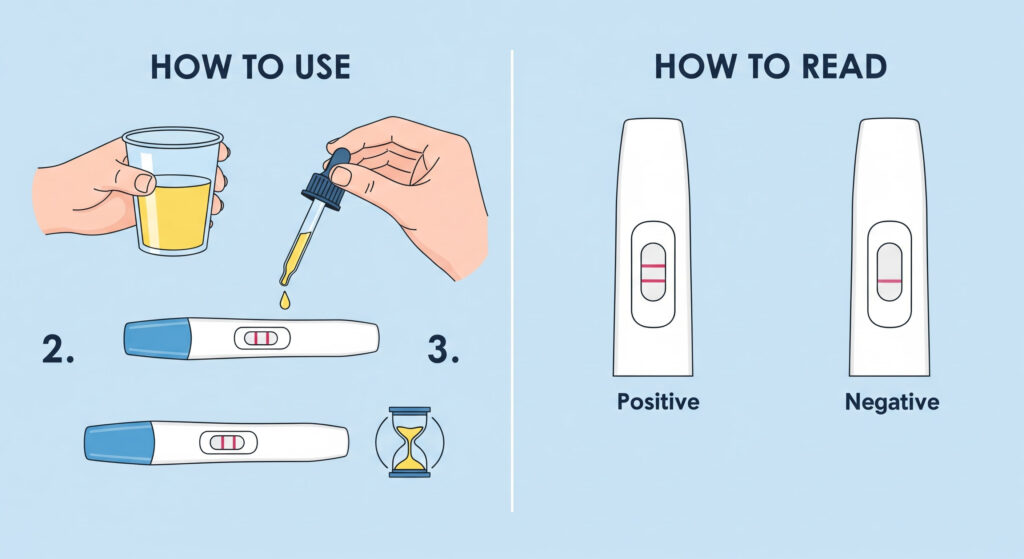
Why a Test Can Go from Negative to Positive
Several factors can make an early negative test turn positive shortly afterward:
- Rising hCG Levels: After implantation, hCG levels rise rapidly. Most sources agree hCG doubles every 2–3 days. If you took a test when hCG was still below the test’s cutoff, it would read negative. But in 24–48 hours your hCG might climb high enough for a positive. For example, the Cloudnine pregnancy guide explains that if today’s hCG was “slightly below” detection, it may “double up sufficiently by tomorrow to produce a positive test”.
- Testing Too Early: The most common reason is testing before enough hCG is present. Even if you are pregnant, testing days before your period can give a false-negative. Doctors recommend waiting until at least the day of your missed period (or 1–2 days after) for best accuracy. If your ovulation happened later than assumed, your “missed period” date may not have arrived yet. Testing early can mean hCG is still very low. One expert advises: “If you test too early, your [hCG] level may be too low to detect on the home kit, and it may show up as negative”.
- Late Implantation: Sometimes the fertilized egg implants later (e.g. 10–12 days after fertilization) rather than immediately. Until implantation occurs, your body isn’t making hCG. In such cases, a test taken before implantation will be negative. Once implantation happens, hCG rises and a test after that can turn positive. In other words, two tests on successive days might straddle the implantation event, causing the shift in result.
- Diluted Urine: Drinking lots of fluids or testing midday can dilute your urine. Lower concentration of hCG makes it harder for the test to catch it. In early pregnancy, when hCG is low, first-morning urine is best because it is most concentrated. If you drank a lot of water yesterday before testing, that test might read negative. A more concentrated sample the next morning might then show positive.
- Test Sensitivity: Not all tests are equal. Some brands (or “early detection” tests) are more sensitive and can detect lower hCG. If your first test was a standard kit, and your hCG was borderline, it could come back negative. Using a more sensitive test later (or simply retesting after a day) can yield a positive.
- User or Test Error: Occasionally a faulty or expired test, or not following instructions, leads to a wrong reading. For example, reading the result too late can cause evaporation lines. Always use a fresh test and follow timing carefully.
In summary, if today’s result was negative, it often just means your hCG was under the threshold – not that pregnancy is impossible. As one guide notes, a change from negative to positive “often happens because of timing and hCG levels”.
What To Do After a Negative Test
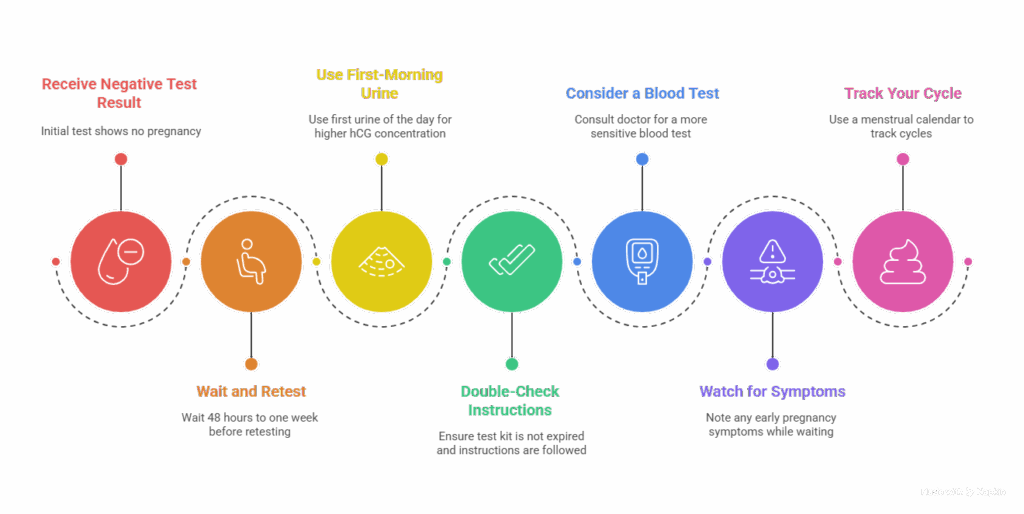
If you get a negative test but still suspect pregnancy, follow these steps:
- Wait and Retest: Give it time. Experts recommend waiting about 48 hours to one week and testing again. Dr. Homaifar (Flo) says, “If pregnancy is suspected despite a negative test, the test should be repeated in one week”. In Cloudnine’s advice, if you still have no period, “wait 48 hours and take another test. If the second test still appears negative and there’s still no period, it may be time to consult a doctor”.
- Use First-Morning Urine: When you retest, try with first urine of the day, which has the highest hCG concentration. Avoid drinking excessive fluids before testing.
- Double-Check Instructions: Make sure the test kit isn’t expired and that you followed directions exactly (wait the correct number of minutes, etc.). Even small deviations can affect the result.
- Consider a Blood Test: If you’ve missed your period and tests remain negative, talk to your doctor. A blood test measures hCG directly and is more sensitive than home urine tests. It can detect pregnancy sooner and at lower hormone levels. Medical professionals can also use an ultrasound or other checks if needed.
- Watch for Symptoms: While waiting, note any early pregnancy signs (breast tenderness, nausea, fatigue, implantation bleeding). Such symptoms don’t confirm pregnancy on their own (they overlap with PMS), but if you still have concerns, mention them to your doctor.
- Track Your Cycle: Keeping a menstrual calendar can help you test at the right time. Apps or reminders can prevent testing too early in future cycles.
In short, a single negative result isn’t final if you still feel pregnant. Keep calm and test again at the right time. Many sources stress that patience is key, since hCG doubles every 2–3 days, meaning a short wait can change the outcome.
When to Seek Medical Advice
Most of the time, a flip from a negative to positive is just normal early-pregnancy timing. But you should see a doctor if:
- You have a missed period and repeated home tests (even a week apart) are still negative. A doctor can rule out pregnancy properly and check for other causes of a late period.
- You experience severe symptoms (heavy bleeding, intense pain, etc.) along with confusing test results.
- You have had two negative tests one week apart but your body still feels pregnant.
Healthcare providers can offer guidance, perform sensitive blood hCG tests, and ensure everything is on track. According to medical advice, if two home tests are negative but pregnancy is still possible, blood tests or ultrasounds can help confirm or rule it out.
Key Takeaways
- Yes, it can happen: A negative test today can turn positive tomorrow if taken very early, because hCG levels rise quickly.
- Time matters: Implantation timing (often 6–12 days post-conception) and hCG doubling (about every 2–3 days) are the main reasons for a delayed positive.
- Test properly: For best results, wait until about the day of your missed period and use first-morning urine.
- Retest wisely: If you test negative but still have no period, try again in 2–3 days or one week.
- See a doctor if needed: Persistent confusion or late periods can be checked by a provider with a blood test or ultrasound.
Pregnancy tests are reliable when used correctly, but early testing can be tricky. By waiting a little longer, using concentrated urine, and following up with your doctor if needed, you can be confident in your results and next steps.